


Safety Guide, Pretend Play & Activities
What Does a Firefighter Do? An Empowering Safety Guide for Young Children
Big red trucks, soaring ladders, and thrilling sirens make firefighting one of the most mesmerizing careers for preschoolers and early elementary students. Yet beneath this fascination, some children experience deep anxiety regarding flames, alarms, or household fires. The heavy protective gear, dark oxygen masks, and intense loud noises can also inadvertently intimidate sensitive youngsters.
In early childhood pedagogy, the firefighting profession must be anchored in themes of safety, community teamwork, and gentle bravery—rather than catastrophe. Firefighters are not just people who battle fires; they are compassionate rescue experts who protect families, rescue stranded animals, and teach accident prevention. This guide offers parents and teachers empathetic advice, safe roleplay scenarios, and creative art activities to build confidence.
What Do Firefighters Actually Do? Rescuers of the Neighborhood
When explaining the responsibilities of firefighters to young children, shift focus away from destructive blazes toward relatable community assistance:
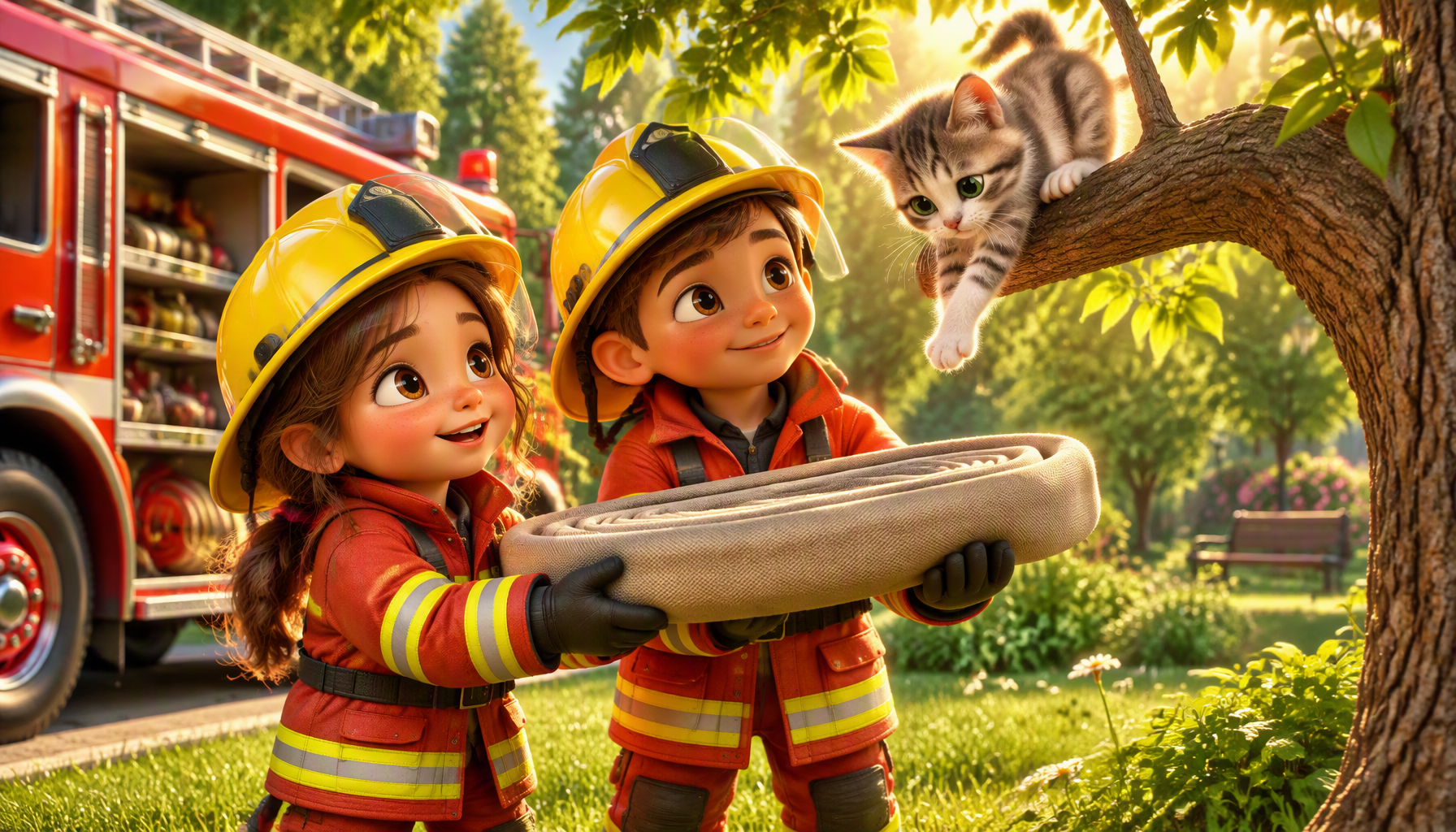
- Rescuing Stranded Animals: Whether a frightened kitten climbs too high into a tree or a puppy slips into a ditch, firefighters use ladders and ropes to bring pets back safely.
- Responding to Natural Emergencies: During heavy storms or floods, they pump away excess water and use special rescue rafts to help neighbors navigate flooded streets.
- Extinguishing Fires: Using pressurized water hoses and safe smothering foams, they quickly put out sparks and protect homes and surrounding forests.
- Teaching Fire Safety: They visit schools and kindergartens to demonstrate home safety habits and explain what to do if an alarm sounds.
Firefighting is fully gender-neutral. Dedicated women and men train together, operating heavy equipment and managing complex rescue missions with mutual respect and resilience.
Overcoming Gear Intimidation and Fire Fears
In an actual smoke situation, children sometimes hide under beds or in closets because heavily geared rescuers look unfamiliar. Proactive familiarization dissolves this fear:
- Demystify the Protective Suit: Describe the heavy turnout coat, boots, and face mask as a “superhero protective suit.” Explain: “Just like we wear boots to jump in puddles, firefighters wear these coats so heat and smoke cannot reach them.”
- Reframe Warnings Positively: Replace anxiety-inducing threats (“Don’t touch matches or everything will burn!”) with calm boundaries: “Fire belongs safely in the kitchen stove or campfires. Matches and lighters are adult tools that keep us warm when used properly.”
- Practice the Smoke Crawl: Teach children that clean air stays low near the floor. Turn crawling under imaginary smoke into a fun animal game, pretending to move like cautious turtles toward the exit.
Engaging Classroom and At-Home Activities
Experiential practice transforms theoretical safety guidelines into instinctual habits:
1. Roleplay Scenario: The Brave Pet Rescue Mission
- Setup: Provide a paper fire helmet or cardboard box converted into a truck steering wheel. A favorite stuffed animal sits stranded on the back of a sofa.
- Action: The child firefighter arrives with simulated siren sounds, sets up an imaginary ladder using cushions, speaks soothingly to the pet, and carries it down to safety. This exercise highlights empathy and deliberate problem solving over chaos.
2. Stop, Drop, and Roll Practice
Lay down a soft rug and practice the classic life skill. Teach your child that running feeds flames with air. When you shout “Safety call!”, they freeze, gently lower themselves to the ground, cover their eyes with their hands, and roll back and forth. Practicing this physically builds vital self-preservation reflexes.
Color & Learn: Explore Community Helpers on Paper!
Translating heroic rescue missions into artwork helps children process safety concepts while enjoying mindful, hands-on fun. Bringing community helpers to life with crayons transforms abstract concepts into warm, approachable memories.
Discover our full collection of printable sheets celebrating essential community heroes, specialized vehicles, and everyday problem solvers. Let your child select their favorite characters and experiment with vibrant new shades!
👉 Click Here to Explore & Print Free Professions Coloring Pages
Gather the colored pencils, lay out the sheets, and watch your little artist discover the rewarding world of community helpers one color at a time!
Frequently Asked Questions (FAQ)
What should I do if my child panics at the sound of sirens?
Acknowledge their sensitivity. When a siren wails, head to the window and wave. Remind them: “That siren is asking cars to move aside kindly because someone needs a quick helper right now.”
How should the emergency number 911 or 112 be taught?
Post the digits visibly on a refrigerator board. Explain that emergency dispatchers are gentle listeners who send help, but emphasize clearly that the number must never be dialed as a prank.
Why is non-stereotyped career presentation essential for firefighters?
Showing both female and male firefighters dismantling heavy equipment and leading teams proves that physical courage and care are universal human attributes, encouraging children to choose paths based on interest rather than gender stereotypes.


Comments (0)