


Learning About Jobs: Guide for Kids
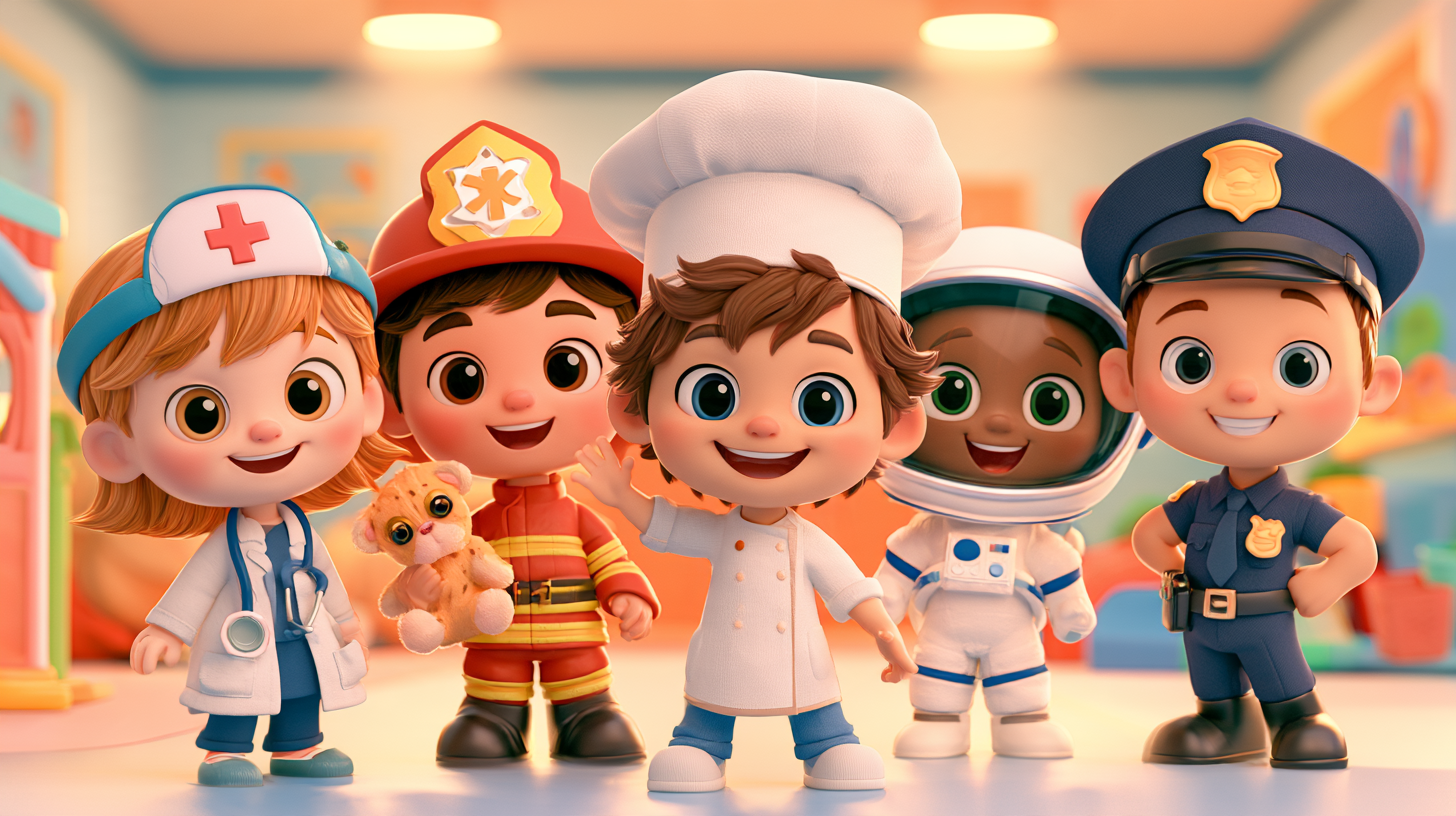
Seen through the eyes of a child, professions are not about paying bills or rushing to an office early in the morning. In their imagination, community helpers are real-life superheroes racing to put out fires with big red engines, friendly healers listening to the heartbeat with a stethoscope, or culinary magicians turning simple flour into delicious pastries.
Preschool, kindergarten, and early elementary years mark the golden stage where children observe their surroundings with genuine curiosity and mimic the roles they see. The familiar question, “What do you want to be when you grow up?”, is far more than casual small talk. It serves as an engaging entry point where empathy, teamwork, social awareness, and fine motor coordination take root.
5 Developmental Benefits of Learning About Professions
Why is the theme of jobs and community helpers revisited every year in early childhood education? It does much more than expand vocabulary; it strengthens a child’s cognitive, emotional, and physical foundation.
1. Understanding Teamwork and Social Roles
Young children initially experience life from an egocentric point of view, assuming everything revolves around them. Learning about jobs helps them realize that everyday life is an interconnected support network:
- Without bakers, our morning breakfast table would lack fresh bread.
- Without farmers, we would not have fresh fruits and vegetables.
- Without sanitation workers, our parks and neighborhoods would not stay clean.
This helps children appreciate that every effort matters and that community members rely on one another.
2. Reducing Fear and Anxiety
Many young children feel nervous around doctors in white coats, dental equipment, or uniform-clad officers. Most childhood fears stem from the unfamiliar. When a child learns how a stethoscope works and understands that a vaccine acts like a protective shield against germs, hospital visits shift from scary encounters to interesting experiences.
3. Symbolic Play and Abstract Thinking
In child development, play is serious business. Using a banana as a walkie-talkie, turning a cardboard box into a fire engine, or holding a ruler like a thermometer exercises symbolic thought. These scenarios build creative problem-solving and narrative reasoning.
4. Fine and Gross Motor Coordination
Career-themed play naturally activates physical development:
- Fine Motor Skills: Kneading playdough like a chef, wrapping bandages like a nurse, or coloring within the lines of a toolbox coloring page builds hand-finger muscles for future handwriting.
- Gross Motor Skills: Carrying a mailbag, steering an imaginary ship, or running with a pretend hose strengthens balance and large muscle groups.
5. Empathy and Emotional Awareness
Stepping into someone else’s shoes invites a child to ask, “How does this person help others?” Caring for a toy kitten as a vet nurtures compassion; reading a picture book aloud as a teacher builds active listening and patience.
How to Introduce Jobs by Age Group
Children understand the world differently at each stage. Tailoring the approach keeps learning engaging and effective:
| Age Group | Focus & Interest | Best Teaching Approach |
|---|---|---|
| Toddlers (Ages 2–3) | Concrete objects, sounds, and motion. | Sound imitations (sirens, engine rumbles), large picture cards, and object matching. |
| Preschool (Ages 4–5) | Dress-up, roleplay, and short narratives. | Costume play, handling kid-safe tools, coloring pages, and guided discussions. |
| Early Elementary (Ages 6–8) | The “how” and “why” behind daily work. | Field visits (bakeries, fire stations, libraries), interviews, and simple craft projects. |
3 Common Pitfalls to Avoid
- Gender Stereotyping: Saying “Only girls become nurses” or “Boys don’t work as bakers” sets unnecessary limits. Highlight that all roles can be pursued by anyone.
- Ranking Professions: Remarks like “Study hard or you will do manual work” harm respect for honest effort. Every job serves an essential community purpose.
- Pressuring the Future: Pushing a child to become a specific professional overshadows natural curiosity. At this age, the goal is exploration, not career planning.
Easy Activities for Home and the Classroom
Hands-on experiences leave a lasting impression. Try these simple, low-cost activities:
1. “Whose Tool Is This?” Guessing Game
Place items representing three different professions inside a small bag or basket:
- Chef: A wooden spoon, a small pot lid, an apron.
- Doctor: Cotton balls, a toy syringe, adhesive bandages.
- Artist: A paintbrush, an empty palette, colored pencils.
Have your child pull out one item at a time, identify the profession it belongs to, and explain what it does.
2. Recycled Material Props
Imaginative play does not require costly toy sets:
- Cut a paper plate into a steering wheel for a bus driver.
- Tape two cardboard tubes together to make binoculars for a ship captain.
- Fold paper into a tall white hat for a little chef.
3. Reinforcing Concepts with Coloring Pages
After active play, transition to table time with job-themed coloring pages. Coloring a firefighter’s gear, a doctor’s coat, or a pilot’s plane helps visually consolidate the tools used in each trade while sharpening motor control.
What’s Coming in Our “Learning About Jobs” Series?
This introductory guide kicks off a multi-part series exploring children’s favorite community roles in detail. Each upcoming post will feature:
- A Child-Friendly Story: A warm, relatable introduction to read together.
- Key Tools & Tasks: Clear explanations of what each professional does daily.
- Home Roleplay Ideas: Simple pretend-play prompts for parents and kids.
- Art and Coloring Exercises: Printable coloring recommendations to build fine motor skills.
Our first feature will spotlight our friendly neighborhood health heroes: Doctors!
Frequently Asked Questions
At what age should I start introducing jobs to my child?
Around age 2, children can start recognizing familiar workers (drivers, delivery couriers, doctors) through casual observation. By ages 3–4, structured pretend play and themed coloring can be introduced.
What if my child is obsessed with only one profession?
This is entirely normal. Children often focus on one role—like astronauts or firefighters—for weeks. Support their interest with related picture books and coloring sheets; their curiosity will broaden naturally over time.
How do job coloring pages help learning?
Visual memory is prominent during early childhood. Coloring the specific uniforms and tools of each worker cements those details in memory while refining grip strength and hand-eye coordination.
Comments (0)